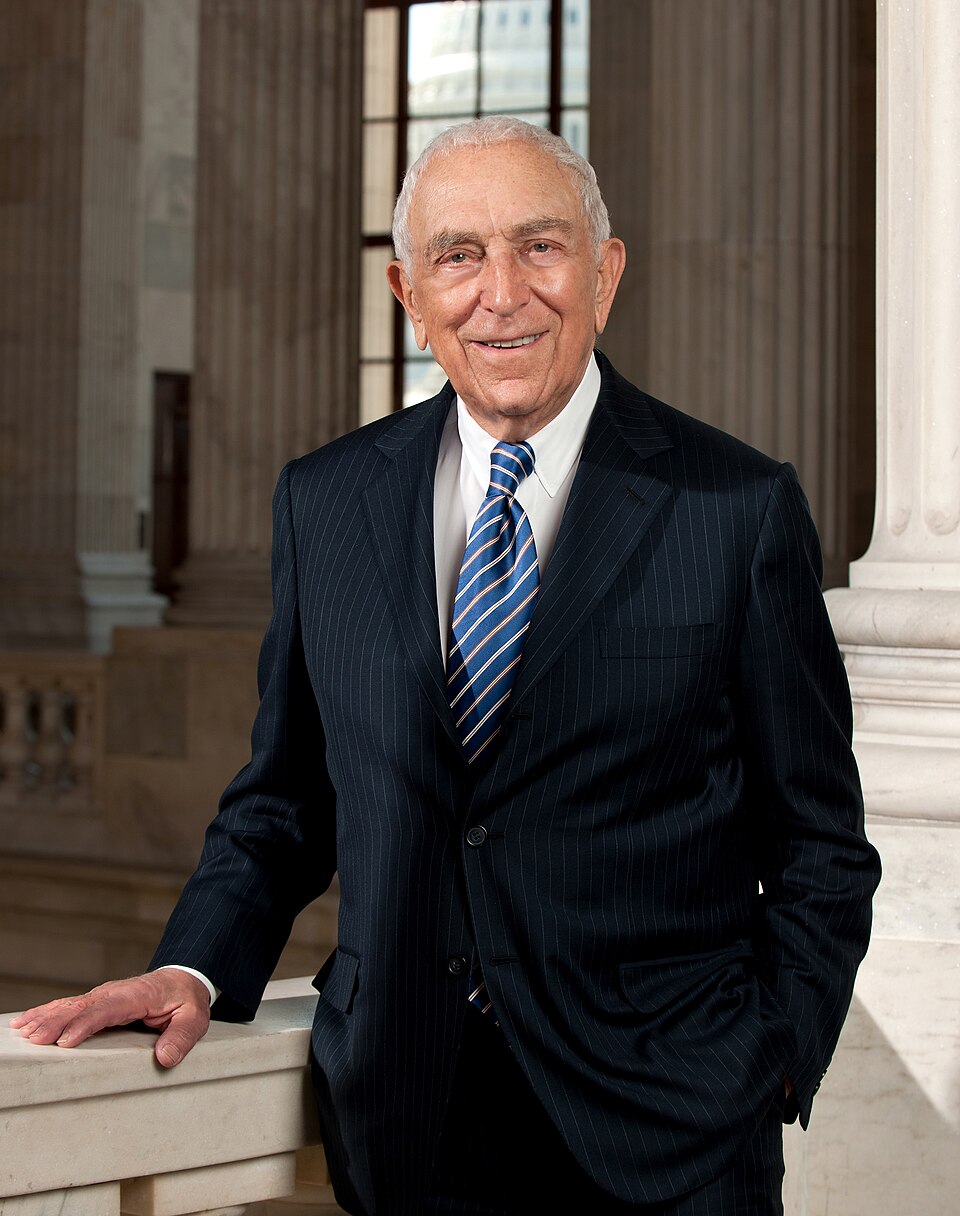
Unpacking Frank Lautenberg's Wealth: ADP, Real Estate & Blind Trusts
Frank Lautenberg was a name synonymous with both profound business acumen and enduring public service. Rising from humble beginnings, he became a co-founder of the payroll giant Automatic Data Processing (ADP) and later a long-serving U.S. Senator for New Jersey. His journey embodies a unique American success story, culminating in a significant estimated net worth that cemented his status as one of the wealthiest and most influential lawmakers of his era. Delving into the details of Frank Lautenberg's net worth reveals a fascinating interplay between entrepreneurial vision, strategic investments, and the responsibilities of public office.
At the time of his passing, Frank Lautenberg's net worth was estimated to be around
US$55 million. This substantial fortune wasn't amassed overnight but was the culmination of decades of hard work, astute business decisions, and careful financial planning. The pillars of his wealth creation are distinct: his foundational role in ADP, a diversified portfolio of real estate holdings, and the strategic establishment of blind trusts. Understanding these components offers invaluable insight into how he navigated the complex worlds of private enterprise and public stewardship, leaving behind a legacy that continues to resonate.
The Genesis of a Fortune: From Modest Roots to ADP Titan
Born Frank Raleigh Lautenberg on January 23, 1924, in Paterson, New Jersey, his early life was far from privileged. The son of immigrant parents who had fled hardship in Europe, Lautenberg was instilled with the values of hard work and sacrifice from a young age. This foundational resilience would prove critical in his future endeavors. His formative years coincided with World War II, during which he served honorably in the U.S. Army Signal Corps from 1942 to 1946. This period of service, followed by leveraging the GI Bill, provided him access to higher education, a pivotal step in his trajectory. He attended Columbia Business School, acquiring the economic and managerial knowledge that would ultimately shape his destiny.
Lautenberg's entry into the private sector began modestly, honing his skills as a salesman. However, his innate business sense and foresight soon propelled him into a transformative opportunity. He became an early partner at Automatic Data Processing (ADP), a pioneering payroll-management company that would revolutionize how businesses handled their finances. His early involvement and subsequent leadership were absolutely central to the rapid accumulation of his fortune. As one of the founders and later serving as CEO in the mid-1970s, Lautenberg garnered substantial equity and retirement income from the firm.
ADP, under his guidance, grew from a nascent enterprise into an industry powerhouse, demonstrating the immense value of early investment and strategic leadership in a burgeoning technology sector. His vision helped steer ADP through its critical growth phases, turning it into a corporate giant still thriving today. This success story from humble beginnings to business magnate became a defining aspect of Lautenberg’s public identity and the primary driver behind
Frank Lautenberg's $55M Fortune: From ADP Co-founder to US Senator.
Diversifying Wealth: Real Estate, Investments, and Blind Trusts
While ADP was undoubtedly the engine of Lautenberg's initial wealth, his financial strategy extended far beyond a single venture. Recognizing the importance of diversification, he and his wife strategically invested in a robust portfolio of real estate and other investment assets. These holdings were not confined to one location but spanned multiple states, encompassing both residential and commercial properties. Such diverse real estate holdings served not only as a source of income and appreciation but also as a tangible hedge against market fluctuations, a common strategy for individuals looking to preserve and grow significant wealth.
A particularly significant component of Frank Lautenberg's financial architecture was his use of long-term investments and trust funds, notably
blind trusts. In his 2012 financial disclosures, these holdings represented a substantial portion of his reported net worth. Blind trusts are an essential tool for public officials, designed to prevent conflicts of interest. Once assets are placed into a blind trust, the owner has no knowledge of how those assets are managed or what specific investments are made. This separation ensures that political decisions cannot be influenced by personal financial gain.
Lautenberg’s financial disclosures highlighted the considerable scale of these trusts:
- One significant trust was valued between US$25 million and US$50 million.
- Another trust held assets ranging from US$1 million to US$5 million.
These trusts effectively diversified his wealth beyond active business management and demonstrated a commitment to ethical conduct in public service. The establishment of such mechanisms underscores a savvy approach to managing significant wealth while adhering to the stringent ethical requirements of a U.S. Senator. For anyone entering public life with substantial assets, understanding and implementing such financial structures is a crucial step towards maintaining public trust and personal financial integrity.
Public Service and Private Wealth: A Legacy of Impact
Lautenberg's trajectory from a self-made entrepreneur to a committed public servant underscores his dual identity. After a highly successful business career, he transitioned into politics, first serving in the U.S. Senate from 1982 until 2001. Following a brief hiatus, he returned to the Senate in 2003, serving until his death in June 2013. This long tenure solidified his reputation as a political powerhouse, often labeled "the last of the New Deal liberals" and, notably, the last serving World War II veteran in the Senate.
His personal life, though often private, was anchored in family and relationships, even amidst the immense pressures of business and political life. The careful management of his finances, including the implementation of blind trusts, allowed him to navigate the scrutiny often associated with wealthy politicians. This transparency was crucial in maintaining credibility and focusing on his legislative work rather than fending off accusations of conflict of interest.
The journey of accumulating wealth like Frank Lautenberg's, from a groundbreaking business venture to strategic financial planning, offers several key takeaways:
- Early Vision & Risk-Taking: His willingness to invest in and lead ADP in its nascent stages paid immense dividends.
- Diversification: Not putting all financial eggs in one basket, but spreading wealth across different asset classes like real estate and various investments.
- Ethical Financial Management: For public figures, the use of blind trusts is a crucial mechanism for maintaining integrity and avoiding perceived conflicts of interest. This ensures that wealth can coexist with public service without undue scrutiny.
Frank Lautenberg's net worth was not merely a figure; it was a testament to a life lived with ambition, resilience, and a deep sense of purpose. It afforded him an independence that shaped his political career and empowered his philanthropic efforts, contributing significantly to his enduring legacy. You can read more about
Frank Lautenberg's Legacy: Business Titan, Political Powerhouse & Net Worth.
Conclusion
Frank Lautenberg's life story is a compelling narrative of American aspiration and achievement. His estimated net worth of $55 million was meticulously built upon the foundation of his pioneering role at ADP, strategically diversified through extensive real estate holdings, and ethically managed through sophisticated blind trusts. From his modest origins in Paterson, New Jersey, to becoming a titan of industry and a revered U.S. Senator, Lautenberg’s financial journey mirrored his political career in its depth and impact. He demonstrated that immense personal wealth could be accumulated and managed responsibly, allowing him to focus on a lifetime of public service and leave an indelible mark on both the business world and the political landscape.